
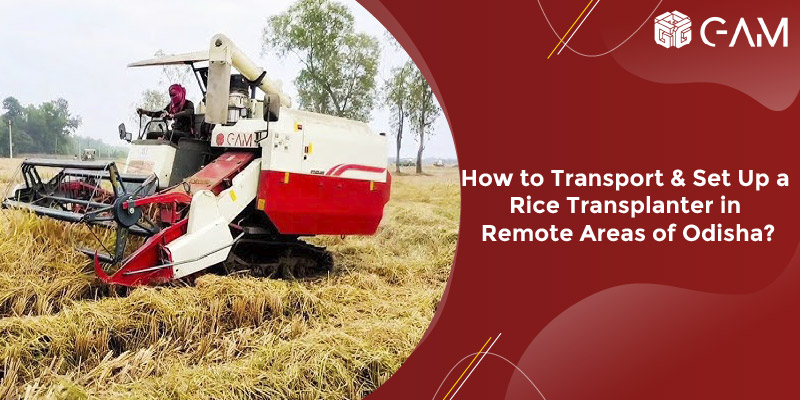
You already know that with so much of the land under rice farming, mechanisation is no longer a luxury. In fact, it is a necessity in 2025. Among these is one of the most transformative innovations for paddy growers: the rice transplanter machine, which has gained global recognition due to its amazing features. When you buy a rice transplanter machine in Andhra Pradesh and Odisha, it saves labour, improves efficiency, and ensures uniform planting, which ultimately boosts yield. A rice transplanter machine is deeply connected with paddy cultivation in India, but then there’s a challenge. In states like AP and Odisha, farmers of remote villages often struggle with the transportation, setup, and proper use of these machines, and if you want to know more about how to set them up, this guide is for you.
But why do farmers in Andhra Pradesh and Odisha need rice transplanters?
Well, the answer is simple. When you buy a rice transplanter machine in Andhra Pradesh and Odisha, it improves efficiency and ensures uniform planting, which ultimately boosts yield. A rice transplanter:
- Saves labour costs
Manual transplanting requires a huge workforce, which can become increasingly complex to find during peak seasons. A good quality rice transplanter will help you in such cases. - Faster operations
A rice transplanter can do the work of 20–30 labourers in a fraction of the time. - Better plant spacing
These machines come with better plant spacing that promotes healthier crop growth and easier weeding. - Improved yield
It increases yield and reduces crop stress, often leading to higher grain output. - Long-term savings
Finally, the rice transplanter machine price in Odisha may be high, but the returns are quick due to reduced labour dependency.
The Challenge: Transporting Rice Transplanters
Transporting the rice transplanters can be a tough job. Some of the most common problems are:
- Poor road connectivity
- Lack of vehicles for bulky machines
- High transportation costs
- Delay in delivery, especially during peak season.
- Tension of machine damage during transport.
So, how to do it like a professional?
Whether you are from Andhra Pradesh or Odisha, if you follow these steps, you can easily transport it safely.
-
Choose the Right Dealer
Always buy from an authorized dealer as they can ensure safe packaging, proper loading, and transit insurance. Apart from that, avoid second-hand sellers who may cut corners.
-
Check Packaging and Protection
Check the packaging. New machines should be packed with sturdy frames, bubble wrap, or wooden crates. Apart from that, ensure detachable parts (like trays, handles, and tires) are packed separately. Most importantly, a waterproof covering is a must during monsoon transport.
- Select the Right Vehicle
If you have small manual machines, use pickup vans or even autos for work. But for 4–6 row machines, use a mini-truck or tractor-trailer, and for riding machines, use flatbed trucks with ramps.
-
Opt for Insurance & Tracking
Always insist on transit insurance to cover damage. And also ensure the dealers offer GPS tracking so you have peace of mind until the machine reaches you.
-
Plan for Road Conditions
Finally, as you already know, rural roads may be muddy or narrow, so coordinate with local transporters who know the terrain well. But in hilly or tribal areas, ensure to opt for partial manual unloading.
Setting Up a Rice Transplanter in Rural Adhra Pradesh and Odisha
Now that you have your rice transplanter, you need to set it up correctly for best use. Some may think it’s a challenging task, but following the steps below will make it easier for you:
Step 1: Unloading
Use ramps or manual lifting with at least 4–5 people to unload. Once done, check for dents, scratches, or missing parts before signing the delivery papers.
Step 2: Assembly
Attach trays, handlebars, wheels, and seedling racks. For self-propelled models, connect the engine, fuel tank, and battery for better performance.
Step 3: Field Preparation
Make sure the paddy field is puddled correctly so it’s soft, level, and muddy. Side by side, the water depth should be around 2–3 cm for easy transplanting.
Step 4: Machine Testing
Run the machine in a small section first. Adjust row spacing, depth, and seedling grip. Train at least one person in the family or community to operate it confidently.
Step 5: Ongoing Maintenance
Finally, do daily cleaning of mud and debris, and regular oil checks and lubrication. Occasionally, have seasonal servicing through authorized service centers, and you’re good to go.
Bottom Line
As it may sound big and complicated, many farmers have had a great experience with rice transplanters. When you buy a rice transplanter machine in Andhra Pradesh and Odisha, setting it up may sound like a headache. All you need to do is choose the right seller, and nothing about it would feel heavy on your pocket.